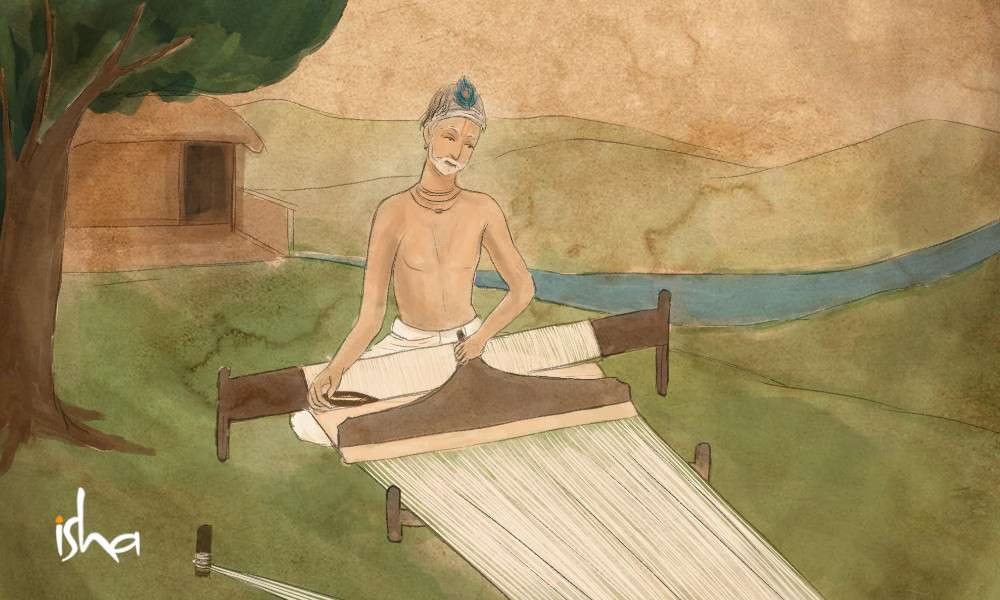
The Path of Surrender: Trusting Beyond Ourselves
In the words of Kabir, "All things are made by Him, and we are gone astray when we trust to ourselves." This profound statement invites us to reflect on the nature of existence and our relationship with the divine. It suggests that the very fabric of our reality is woven by a higher power, and when we lean solely on our own understanding, we risk losing our way. This teaching resonates deeply in a world that often prioritizes self-reliance over spiritual surrender, urging us to reconsider where we place our trust.
As we delve into Kabir's wisdom, we uncover layers of meaning that challenge our contemporary notions of autonomy and control. The essence of this quote speaks to the heart of bhakti, a devotional path that emphasizes surrender to the divine. In a society that celebrates individualism, Kabir's words serve as a gentle reminder that true wisdom and guidance come from recognizing our interconnectedness with all creation. This perspective not only fosters humility but also invites us to embrace a deeper trust in the unseen forces that shape our lives.
The image / the metaphor
At first glance, Kabir's quote presents a striking image of creation and dependence. The phrase "All things are made by Him" evokes a sense of wonder at the intricate web of life, suggesting that everything we encounter is a manifestation of a greater reality. The use of "Him" signifies a personal relationship with the divine, inviting us to see the sacred in the mundane. The latter part of the quote, "we are gone astray when we trust to ourselves," paints a vivid picture of wandering, lost in the wilderness of our own making when we rely solely on our limited perspective.
Diving deeper into the metaphor, we can perceive a call to humility and surrender. The act of trusting in the divine implies a relinquishing of the ego's grip on our lives. It is an invitation to recognize that our understanding is but a fragment of a much larger tapestry. In this light, the metaphor becomes a pathway to liberation, where surrender is not a sign of weakness but a courageous acknowledgment of our place within the cosmos. Kabir's words encourage us to navigate life with a sense of wonder and openness, allowing the divine to guide our steps.
In the speaker's tradition
Kabir's teachings are deeply rooted in the bhakti tradition, which emphasizes love and devotion to God as the ultimate path to spiritual realization. This tradition encourages practitioners to cultivate a relationship with the divine that transcends dogma and ritual, focusing instead on the heart's longing for connection. Concepts such as dharma, or righteous living, and kenosis, the self-emptying of one's ego, resonate with Kabir's message. By surrendering our personal desires and trusting in the divine will, we align ourselves with the greater flow of existence.
In the context of bhakti literature, Kabir's insights echo the sentiments found in the works of other saints, such as Mirabai and Tulsidas, who similarly emphasized the importance of surrendering to divine love. For instance, in the "Bhagavad Gita," Krishna advises Arjuna to relinquish his ego and trust in divine guidance, illustrating the timeless nature of this teaching. Kabir's voice, however, is distinct in its raw authenticity, urging us to confront our illusions of control and embrace a more profound trust in the divine's orchestration of our lives.
Living the teaching
Consider a modern scenario where this teaching finds resonance: a professional facing a significant career decision. In the hustle of ambition, one might feel compelled to rely solely on personal skills and intellect, often leading to anxiety and uncertainty. By embracing Kabir's wisdom, the individual can shift their perspective, recognizing that while effort is essential, true clarity comes from surrendering the outcome to a higher power. This shift in mindset can transform the experience from one of stress to one of peace, allowing the individual to navigate their path with grace.
In the realm of relationships, Kabir's teaching can also illuminate the dynamics of trust and vulnerability. Imagine a couple facing a conflict where each partner is entrenched in their viewpoint, unwilling to yield. By invoking the spirit of surrender, they can create space for humility and openness, recognizing that their love transcends individual perspectives. This practice of surrendering to the relationship itself, rather than clinging to personal desires, fosters deeper connection and understanding, allowing both partners to grow together in love.
A reflection
As we contemplate Kabir's profound words, we are invited to ask ourselves: In what areas of my life am I relying too heavily on my own understanding, and how might surrendering to the divine lead me to greater clarity and peace? This question encourages a deep introspection, inviting us to explore the balance between personal agency and spiritual trust. By reflecting on this inquiry, we can begin to cultivate a more profound relationship with the divine, allowing it to guide our steps as we navigate the complexities of life.




Join the BrightStar Community
Stay connected with daily inspiration, event announcements, and community wisdom