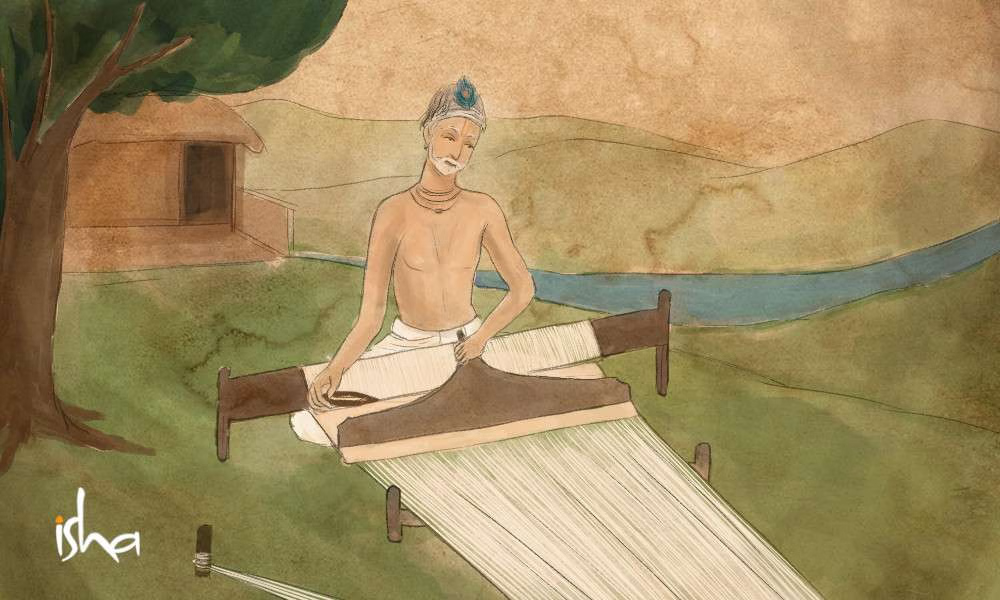
The Eternal Dance of Pleasure and Pain
In the poignant words of Kabir, "There the game of pleasure and pain does not cease," we are invited to reflect on the relentless interplay of joy and suffering that characterizes human existence. This statement encapsulates a profound truth about the duality inherent in life, suggesting that our experiences are often defined by this oscillation. Understanding this dynamic is crucial, as it reveals the nature of our attachments and aversions, ultimately guiding us toward a deeper awareness of the self and the world.
As we delve into Kabir's wisdom, we uncover layers of meaning that challenge our conventional perceptions of happiness and sorrow. The quote suggests that the dance of pleasure and pain is not merely a transient phenomenon but a continuous cycle that shapes our spiritual journey. By acknowledging this duality, we can begin to transcend it, moving toward a state of being that embraces both aspects of our experience without being defined by them.
The image / the metaphor
The imagery in Kabir's quote evokes a vivid sense of a game, a playful engagement with the forces of pleasure and pain. The use of the word "game" suggests a lightness, an invitation to participate in the unfolding drama of life rather than to resist it. This perspective allows us to see our experiences not as burdens but as opportunities for growth and understanding, where each moment—whether joyful or painful—contributes to the richness of our existence.
Diving deeper into the metaphor, we recognize that the "game" implies a certain fluidity and impermanence. Just as players in a game must adapt to changing circumstances, so too must we learn to navigate the ebb and flow of our emotional landscape. This adaptability is essential for spiritual growth, as it encourages us to embrace the full spectrum of our experiences, ultimately leading us to a more profound understanding of the self and the interconnectedness of all beings.
In the speaker's tradition
Kabir's teachings are deeply rooted in the bhakti tradition, which emphasizes devotion and love for the divine as a means of transcending the dualities of existence. Concepts such as dharma, or righteous duty, and bhakti, the path of devotion, are central to this tradition. In recognizing the interplay of pleasure and pain, Kabir invites us to engage with our experiences in a way that fosters compassion and understanding, both for ourselves and for others.
In the context of bhakti literature, Kabir's insights resonate with the teachings found in the Bhagavad Gita, where Krishna speaks of the importance of equanimity in the face of dualities. The Gita encourages us to perform our duties without attachment to the fruits of our actions, a sentiment echoed in Kabir's reminder that the game of pleasure and pain is an integral part of our spiritual journey. This alignment with the broader spiritual tradition highlights the universality of Kabir's message, inviting seekers from all backgrounds to explore the depths of their own experiences.
Living the teaching
Consider a modern scenario where this teaching might resonate: a person faces the loss of a job, an event that brings forth a wave of pain and uncertainty. In this moment, the individual might feel overwhelmed by the weight of their emotions, yet Kabir's wisdom encourages them to recognize this experience as part of the ongoing game of pleasure and pain. By embracing the situation with openness, they can begin to see it not just as a loss but as an opportunity for growth, reflection, and ultimately, transformation.
In the realm of relationships, the interplay of pleasure and pain is often palpable. A couple may experience moments of deep joy, yet also face conflicts that bring discomfort. Kabir's teaching invites them to view these challenges as integral to their journey together, encouraging them to cultivate patience and understanding. By acknowledging the duality of their experiences, they can foster a deeper connection, learning to navigate both the highs and lows with grace and compassion.
A reflection
As we contemplate Kabir's profound statement, we are left with a contemplative question: How can we embrace the duality of pleasure and pain in our own lives, using it as a catalyst for spiritual growth? This inquiry invites us to reflect on our experiences, encouraging us to find meaning in both joy and sorrow. In doing so, we may discover a path that transcends the limitations of duality, leading us toward a more profound understanding of ourselves and our place in the world.



Join the BrightStar Community
Stay connected with daily inspiration, event announcements, and community wisdom