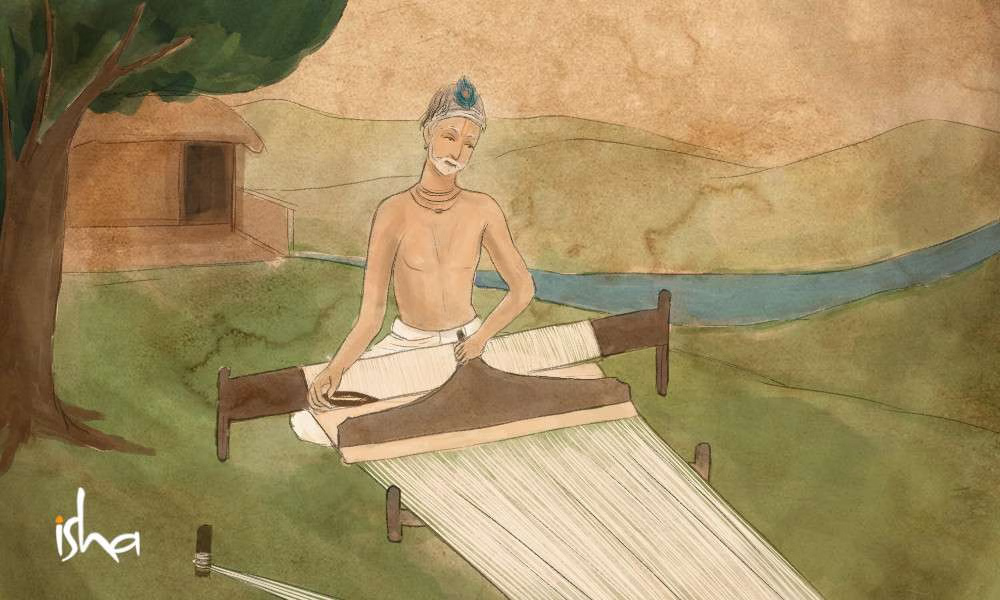
The River of Love: Embracing the Divine in Everyday Life
In the profound words of Kabir, "He is the river of love, He is the cup, and He is the wine," we are invited to explore the multifaceted nature of the divine. This quote encapsulates the essence of love as both a flowing force and a tangible experience, suggesting that the divine is not only the source of love but also the very vessel through which it is experienced. Understanding this relationship is crucial, as it challenges us to perceive love as an all-encompassing presence that permeates our lives, urging us to engage with it deeply and authentically.
As we delve into the layers of this quote, we find a rich tapestry of meaning that speaks to the interconnectedness of existence. Kabir, a 15th-century poet-saint, uses the imagery of a river, a cup, and wine to convey the idea that love is both a journey and a destination. This metaphor invites us to reflect on how we receive and share love, emphasizing that the divine is not separate from us but rather an integral part of our being. In a world often marked by division and isolation, Kabir's words remind us of the unity that love can foster, urging us to recognize the divine in ourselves and in others.
The image / the metaphor
The imagery in Kabir's quote is striking and evocative. The "river of love" suggests a continuous flow, a dynamic force that nourishes and sustains life. Rivers are often associated with movement and transformation, symbolizing the ever-changing nature of love and the divine. The "cup" serves as a vessel, a container that holds this love, while "wine" represents the intoxicating experience of divine love, one that can elevate our spirits and deepen our understanding of existence. Each element of the metaphor invites us to engage with love as both a gift and a responsibility, emphasizing the importance of receptivity and sharing.
Diving deeper into the metaphor, we can see that the river, cup, and wine also reflect different stages of our spiritual journey. The river signifies the initial experience of divine love, flowing freely and abundantly. The cup represents our capacity to hold and nurture this love, while the wine embodies the transformative power of love that can lead to spiritual awakening. This progression encourages us to recognize that love is not a static emotion but a dynamic force that invites us to participate actively in our spiritual growth and connection with the divine.
In the speaker's tradition
Kabir's teachings are rooted in the bhakti tradition, which emphasizes devotion and love for the divine as a path to spiritual realization. Central to this tradition is the concept of bhakti itself, which encourages a personal and intimate relationship with the divine. Kabir's assertion that "He is the river of love" aligns with the bhakti understanding that the divine is both immanent and transcendent, present in every aspect of our lives. This perspective invites practitioners to cultivate a deep sense of devotion, surrendering to the flow of love that connects all beings.
In the context of Kabir's work, we can draw parallels to the concept of "fana," or self-annihilation, found in Sufi thought, which resonates with the bhakti path. Just as the river flows without attachment, so too must we learn to let go of our ego and embrace the divine love that surrounds us. The "Songs of Kabir," as translated by Rabindranath Tagore, serve as a testament to this philosophy, illustrating how love can dissolve the boundaries of the self and lead to a profound experience of unity with the divine.
Living the teaching
Consider a modern scenario where this teaching can be applied: a moment of conflict in a relationship. When faced with anger or misunderstanding, we often forget the river of love that flows beneath our interactions. By consciously choosing to embody the qualities of the cup and the wine, we can transform a moment of discord into an opportunity for connection. This might involve listening deeply, expressing vulnerability, or offering forgiveness, allowing the divine love within us to guide our actions and heal the rift.
Another application of Kabir's teaching can be found in daily practices of gratitude and mindfulness. By recognizing the divine presence in our everyday experiences, we can cultivate a deeper appreciation for the love that surrounds us. This might manifest in simple acts, such as savoring a meal, appreciating a sunset, or connecting with a stranger. Each moment becomes an opportunity to engage with the river of love, reminding us that the divine is not distant but intimately woven into the fabric of our lives.
A reflection
As we contemplate Kabir's profound words, we are invited to ask ourselves: How can I become a vessel for love in my life? This question encourages us to reflect on our relationships, our actions, and our intentions. By embracing the idea that we are both the cup and the wine, we can begin to see how our capacity to love and be loved shapes our spiritual journey and our connection to the divine.




Join the BrightStar Community
Stay connected with daily inspiration, event announcements, and community wisdom