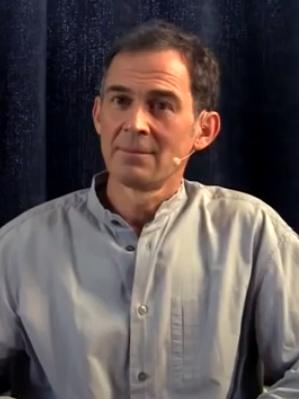
The Unshakeable Foundation of Awareness
Rupert Spira's assertion, "Awareness cannot be doubted, because doubting requires awareness," invites us to explore the profound nature of consciousness itself. In this statement, he highlights the intrinsic relationship between awareness and doubt, suggesting that the very act of questioning our awareness is rooted in it. This realization is not merely philosophical; it has significant implications for how we navigate our inner lives and understand our existence. By recognizing the unwavering presence of awareness, we can begin to disentangle ourselves from the illusions that often cloud our perception.
At its core, this quote serves as a reminder of the stability that awareness provides amidst the fluctuations of thought and emotion. In a world rife with uncertainty and self-doubt, understanding that awareness is the bedrock of our experience can be liberating. It encourages us to turn our attention inward, fostering a deeper connection to our true essence. This exploration is not just an intellectual exercise; it is a transformative journey that can lead to greater peace, clarity, and authenticity in our lives.
The image / the metaphor
When we dissect the quote, we find a rich tapestry of imagery woven into its fabric. The term "awareness" evokes a sense of spaciousness, an expansive field in which thoughts, feelings, and perceptions arise and dissolve. The verb "doubting" introduces a dynamic tension, suggesting movement and uncertainty. Yet, the interplay between these two concepts reveals a profound truth: awareness is the constant backdrop against which all experiences unfold. Just as the sky remains unchanged despite the passing clouds, awareness remains steadfast, even as doubt and uncertainty arise.
Diving deeper into this metaphor, we can liken awareness to a vast ocean, while doubt represents the waves that rise and fall upon its surface. The ocean's depth and stability are unaffected by the tumultuous waves; similarly, our awareness remains unperturbed by the transient nature of doubt. This imagery invites us to cultivate a sense of detachment from our thoughts and emotions, recognizing them as temporary phenomena rather than definitive aspects of our identity. By anchoring ourselves in the depth of awareness, we can navigate the storms of doubt with grace and equanimity.
In the speaker's tradition
Rupert Spira's teachings are deeply rooted in the non-dual tradition, which emphasizes the interconnectedness of all existence and the illusion of separateness. Concepts such as *sunyata* (emptiness) and *fana* (annihilation of the self) resonate with the essence of Spira's message. In this context, awareness is not merely a personal attribute but the fundamental nature of reality itself. The recognition of awareness as the ground of being aligns with the non-dual understanding that our true self transcends the fluctuations of thought and emotion, revealing a deeper unity with all that is.
In his work, Spira often references the teachings of Advaita Vedanta, which similarly posits that the ultimate reality is non-dual and that the individual self is an illusion. Texts such as the *Upanishads* and the *Bhagavad Gita* echo this sentiment, inviting seekers to recognize their true nature as pure consciousness. By situating Spira's quote within this rich tradition, we can appreciate the depth of its implications and the transformative potential it holds for those willing to engage with it earnestly.
Living the teaching
Consider a modern scenario where this teaching can be applied: imagine a moment of self-doubt before a significant presentation at work. As anxiety begins to creep in, one might question their abilities and worthiness. However, by recalling Spira's insight, the individual can pause and recognize that the very act of doubting is rooted in awareness. This awareness allows them to step back from the swirling thoughts, creating space for self-compassion and clarity. Instead of being swept away by doubt, they can anchor themselves in the awareness that observes these thoughts, leading to a more grounded and confident presence.
In a different context, think about a challenging conversation with a loved one. Emotions may run high, and misunderstandings can lead to conflict. By applying the teaching of awareness, one can cultivate a mindful presence, recognizing that the doubts and fears arising in the moment are not definitive truths. Instead of reacting impulsively, they can choose to respond from a place of awareness, fostering deeper understanding and connection. This practice not only enhances relationships but also nurtures a sense of peace and stability within oneself.
A reflection
As we contemplate the essence of Spira's quote, we are invited to engage with a profound question: How can I cultivate a deeper awareness of my thoughts and emotions, recognizing them as transient phenomena rather than definitive aspects of my identity? This inquiry encourages us to explore the nature of our own awareness and to embrace the stability it offers amidst the uncertainties of life. By reflecting on this question, we can begin to shift our perspective, allowing awareness to illuminate our path toward greater understanding and authenticity.




Join the BrightStar Community
Stay connected with daily inspiration, event announcements, and community wisdom