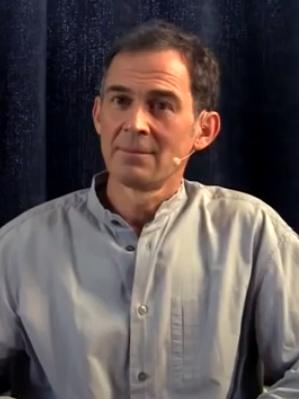
Unveiling the Seeker Within
Rupert Spira's profound invitation, "Look for the one who is looking," beckons us to turn our attention inward, to the essence of our own being. This simple yet powerful statement challenges us to explore the nature of the observer within ourselves, urging us to recognize that the search for truth often leads us back to the self. In a world filled with distractions and external validations, this inquiry becomes not just a philosophical exercise but a vital path toward understanding our true nature.
At its core, this quote encapsulates the essence of non-dual awareness, where the distinction between the seeker and the sought begins to dissolve. It invites us to engage in a deeper exploration of consciousness, prompting us to ask: who is this "one" that is looking? This inquiry is not merely an intellectual pursuit; it is a transformative journey that can lead to profound insights about our existence and the interconnectedness of all life. By recognizing the looker, we may uncover layers of identity that have long obscured our understanding of self and reality.
The image / the metaphor
The imagery of "looking" evokes a sense of active engagement, a dynamic process that suggests movement and exploration. The verb "look" implies not just passive observation but an active seeking, a quest for understanding that requires both courage and curiosity. The phrase "the one who is looking" introduces a duality that invites contemplation: there is the act of looking and the entity that performs this act. This duality serves as a reminder that our perception is shaped by both the observer and the observed, urging us to investigate the relationship between the two.
In the speaker's tradition
Rupert Spira's teachings are deeply rooted in the non-dual tradition, which emphasizes the interconnectedness of all existence and the illusion of separation. Concepts such as *sunyata* (emptiness) and *fana* (annihilation of the self) resonate with the essence of this inquiry. In non-duality, the search for the self is not about finding a separate entity but rather recognizing the underlying essence that connects us to the universe. This perspective aligns with the teachings of Advaita Vedanta, where the realization of the self as *Brahman* (the ultimate reality) is the ultimate goal of spiritual inquiry.
In his work, Spira often references the *Upanishads*, ancient texts that explore the nature of reality and consciousness. For instance, the *Chandogya Upanishad* states, "Tat tvam asi," meaning "You are that," which echoes the sentiment of looking for the one who is looking. This profound realization invites us to recognize that the essence of our being is not separate from the cosmos but is, in fact, an integral part of it. By engaging in this inquiry, we align ourselves with a timeless tradition that seeks to unveil the truth of our existence.
Living the teaching
Consider a modern scenario where this teaching can be applied: you find yourself in a moment of frustration, perhaps during a heated discussion with a colleague. In that moment, the impulse is to focus on the external situation, to blame or defend. However, if you pause and ask yourself, "Who is experiencing this frustration?" you begin to shift your attention inward. This simple inquiry can transform the experience, allowing you to recognize that the frustration arises not from the external situation but from your own perceptions and reactions. This shift can lead to a more compassionate and understanding response, both toward yourself and others.
Another application of this teaching can be found in relationships. Imagine a moment of conflict with a loved one, where misunderstandings abound. Instead of reacting defensively, you might take a step back and inquire, "Who is feeling hurt or misunderstood?" This inquiry invites a deeper understanding of your own emotional landscape and encourages empathy toward the other person. By recognizing the shared essence of being, you can foster a sense of connection that transcends the immediate conflict, paving the way for healing and reconciliation.
A reflection
As we contemplate the depth of Spira's invitation, we are left with a profound question to ponder: "Who is the one that is looking within me?" This inquiry invites us to explore the layers of our identity and the essence that lies beneath. In this exploration, we may uncover insights that not only deepen our understanding of ourselves but also illuminate our connection to the world around us. As we engage with this question, we embark on a journey that transcends the ordinary, leading us toward a more profound experience of presence and unity.



Join the BrightStar Community
Stay connected with daily inspiration, event announcements, and community wisdom